🚨 MAJOR SPOILER WARNING 🚨
This article contains FULL SPOILERS for Squid Game Season 2, including character deaths, plot twists, and the devastating finale. Read at your own risk!
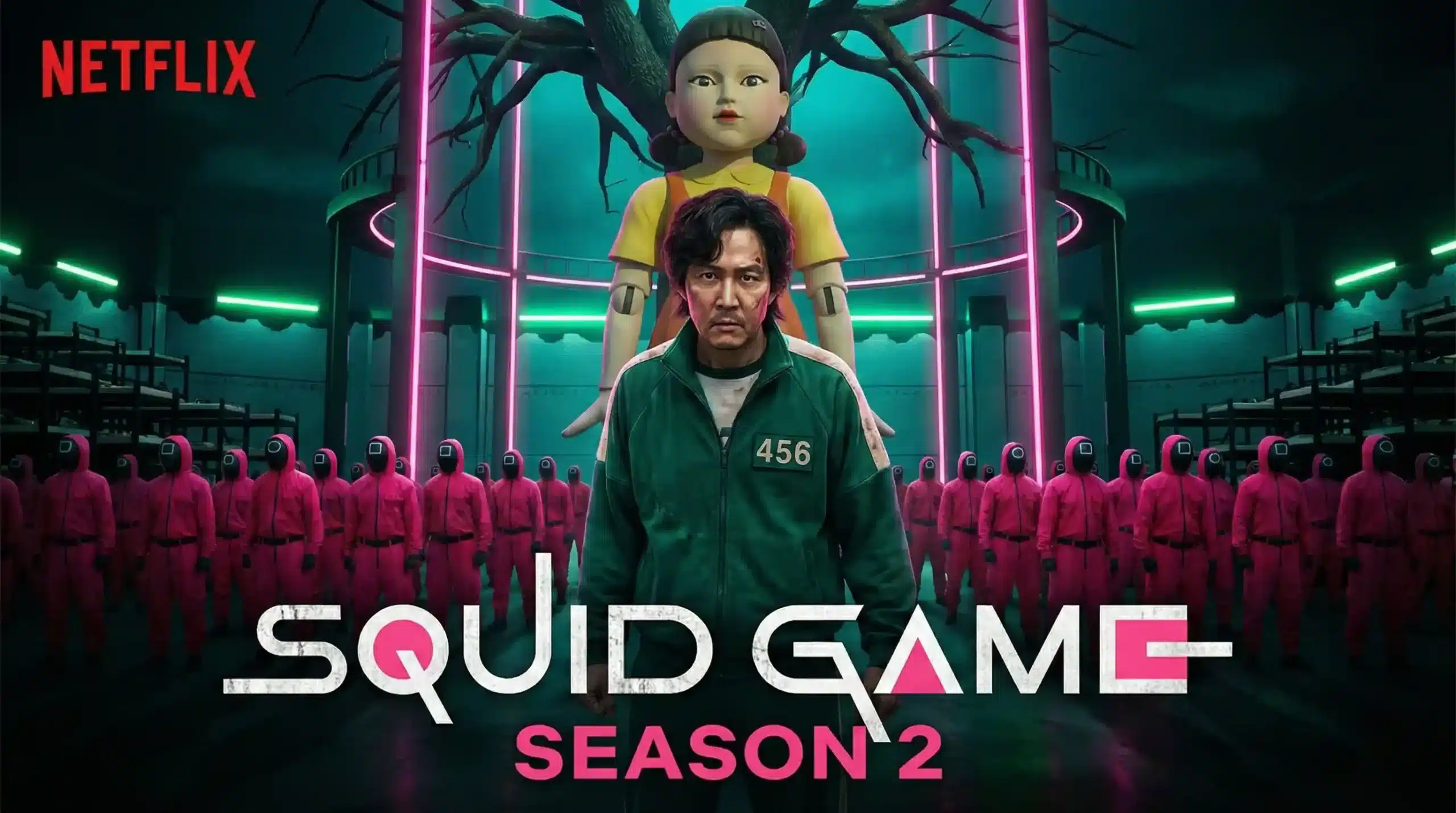
Hello, KDramaBite family! Vani Kola here, your Ending Expert, and I’m still emotionally recovering from the gut-wrenching finale of Squid Game Season 2. When Netflix dropped all seven episodes on December 26, 2025, I knew we were in for a wild ride—but nothing could have prepared me for the ideological warfare, the shocking betrayal, and that absolutely chilling final shot that will haunt us until Season 3 arrives in 2025.
Before we dive deep into the darkness, if you need a refresher on everything that happened this season, check out our detailed Squid Game Season 2 Recap. Trust me, you’ll want to have all the context before we unpack this devastating conclusion.
The Weight of Hope: Understanding Gi-hun’s Mission
Seong Gi-hun closes out Episode 7 wailing on the ground, looking into the lifeless eyes of his best friend, Jung-bae, who has just been murdered by the Front Man. This moment represents the complete destruction of everything Gi-hun fought for throughout Season 2.
Unlike the self-contained narrative of Season 1, where Gi-hun emerged as the sole survivor with blood money in his pocket, Season 2 positions him as a man on a desperate mission. He re-enters the games not for money, but to dismantle the system from within. He spent three years and his entire ₩45.6 billion prize searching for the people behind Squid Game, transforming a dingy motel into his fortress headquarters, assembling a ragtag team of underworld figures to help track down the elusive Recruiter.
When Gi-hun voluntarily returns to the games, he carries the weight of his Season 1 trauma—his mother’s death, Sang-woo’s sacrifice, and the 455 players who died for his victory. This time, he believes he can save people. He believes humanity is worth fighting for. And this belief becomes his greatest vulnerability when facing his ideological opposite.
The Big Reveal: Front Man as Player 001 & The Ideological Battle
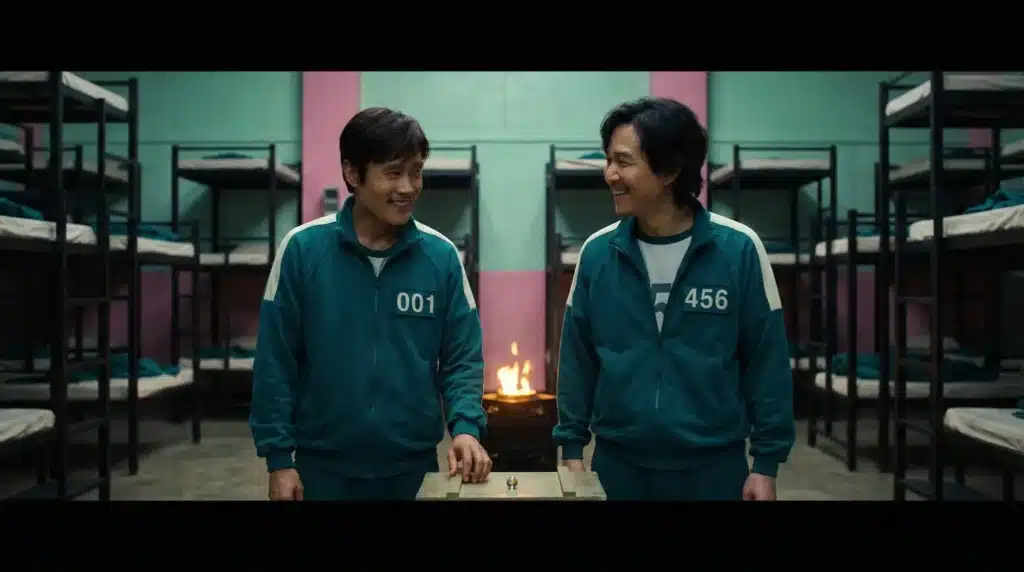
Here’s where Squid Game Season 2 truly elevates itself from survival thriller to psychological warfare. Just as Season 1’s Oh Il-nam turned out to be the wealthy architect behind the games, Season 2 reveals that once Gi-hun decides to reenter the game, the Front Man also chooses to play, taking over the Player 001 mantle and slipping into the persona of “Young-il”.
Hwang In-ho—the Front Man’s real identity and a former winner himself—doesn’t enter the games out of boredom or sadistic pleasure. Lee Byung-hun, who plays the Front Man, explains that his character enters the game to deal with essential ideological differences between himself and Gi-hun, with the Front Man being “someone who believes that there is absolutely no hope for the world or humanity,” while Gi-hun hopes for the best in society.
This isn’t just a game of survival—it’s a philosophical battle about human nature itself. In-ho believes people are fundamentally selfish, greedy, and will always choose self-preservation over solidarity. Gi-hun believes in collective action, trust, and the possibility of redemption. They’re essentially betting against each other, with hundreds of lives as the stakes.
The Complexity of Playing Three Roles
Lee Byung-hun’s performance deserves special recognition here. He describes juggling the identities of Front Man, In-ho, and Young-il as “the most challenging — as well as the most fun — for me as an actor,” having to give different nuances to each of these three aspects. As Young-il, he befriends Gi-hun, shares a fabricated tragic backstory about a dying pregnant wife, and positions himself as Gi-hun’s most trusted ally. Meanwhile, as the Front Man, he orchestrates the very horrors Young-il pretends to oppose.
The tragic irony? By the end of Season 2, In-ho might even subconsciously be rooting for Gi-hun, with one actor noting that as they go through the games together, fighting for their lives, In-ho starts to observe Gi-hun and almost sees a part of his past self in him. There’s a glimmer of humanity left in the Front Man—a tiny hope that Gi-hun might actually be right about the world.
But hope doesn’t stop him from pulling the trigger.
The Vote That Changed Everything: O vs. X
Season 2 introduces a game-changing mechanism: after each deadly round, players vote on whether to continue the games or terminate them, with each eliminated player adding ₩100 million to the prize pool. Those who vote to continue wear “O” badges; those who want to leave wear “X.”
This voting system does something brilliant—it externalizes the internal conflict of every player. Do you cash out with your share now, or do you gamble on survival for a larger prize? As creator Hwang Dong-hyuk notes, this division reflects the modern world’s growing conflicts over ideology, religion, background, gender, and race. Team O versus Team X becomes a microcosm of societal polarization.
The tension reaches its breaking point when the vote gets tied 50-50, prompting a revote the next day. But before that vote can happen, violence erupts in the dormitory during the night. Players who voted to continue see those who want to leave as obstacles to their fortune. A massacre unfolds.
If you’re a fan of intense survival thrillers that push characters to their moral limits, you might also enjoy All of Us Are Dead Season 2 Updates, another Netflix Korean series that explores human nature under extreme pressure.
The Failed Rebellion: Gi-hun’s Desperate Gambit
Gi-hun recognizes the pattern: the games are designed to turn people against each other. When he sees the guards distributing forks and glass bottles with dinner, he knows what’s coming—orchestrated violence that will eliminate players without the games needing to do anything.
His plan is brilliant in its simplicity: when the nighttime massacre begins, his alliance (including Jung-bae, the ex-Marine Dae-ho, and Young-il) will hide under their bunks playing dead. When the guards come to check the bodies, they’ll ambush them, steal their weapons, and fight their way to the control room to confront the Front Man.
Using the commandeered weapons and the vast amounts of military experience in their midst, the group is able to make their way through the colorful labyrinths of the backstage area and up near the control room. For a moment, it seems like Gi-hun might actually succeed. The rebellion is thrilling, desperate, and filled with moments of genuine heroism—particularly from transgender soldier Hwang Hyun-ju, whose Special Forces training proves invaluable.
But this is Squid Game, where hope is currency and tragedy is payment.
The Betrayal: Young-il’s True Identity Revealed
The most heartbreaking moment comes when Young-il separates from Gi-hun and Jung-bae during the firefight, claiming he’s found another route to the shooters. When he goes that way, he ends up killing the two players he brought with him and sends a final radio message to Gi-hun pretending that he failed and died.
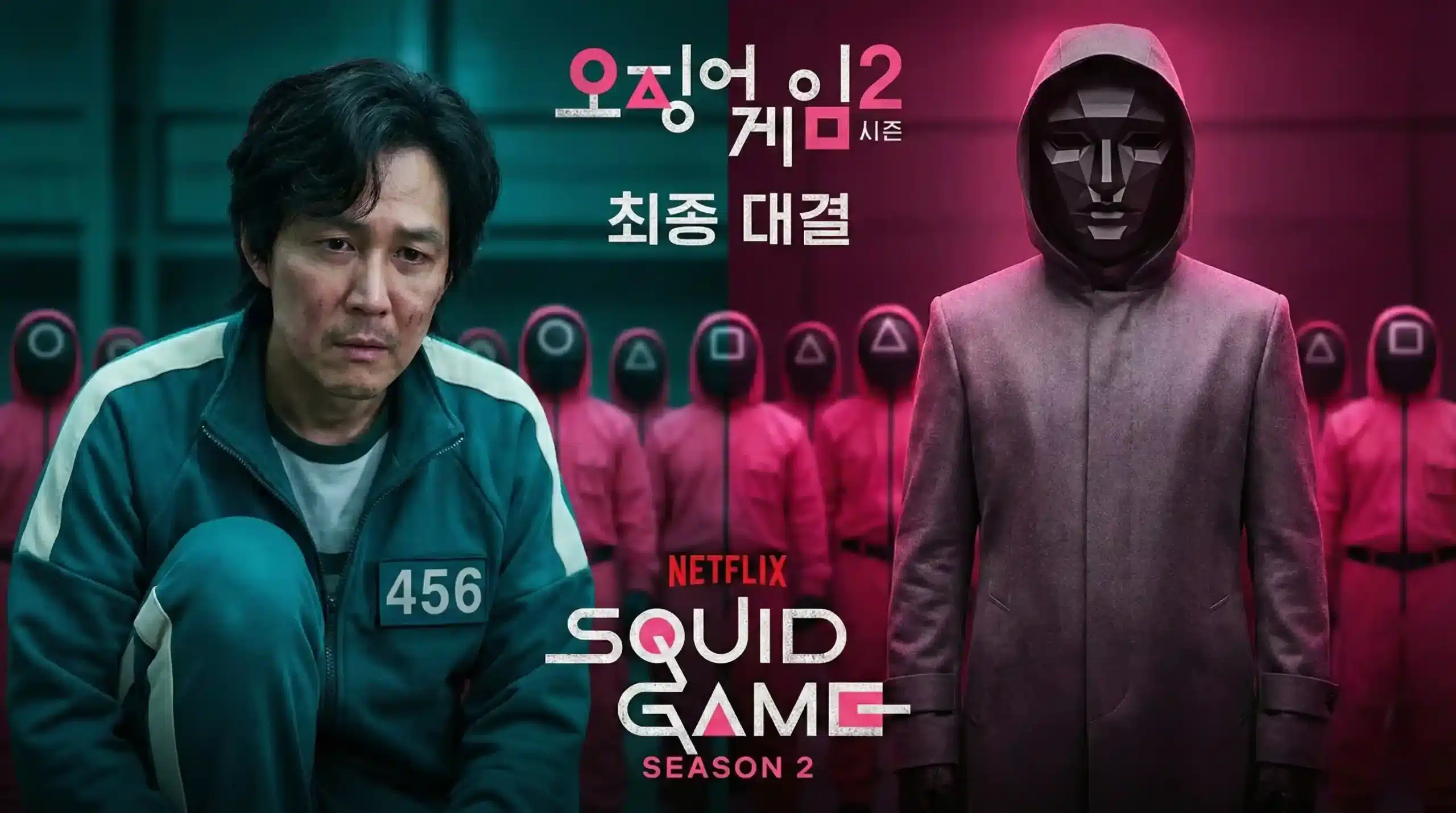
Then comes the reveal that breaks Gi-hun—and the audience. Young-il dons the Front Man’s classic outfit from Season 1, a long gray coat and black mask, and through a voice modulator, asks Gi-hun, “Did you have fun playing the hero?”
The Front Man has been there all along. The man Gi-hun trusted most, the ally he believed shared his mission, was the architect of his suffering. Every conversation, every moment of camaraderie, every shared plan was orchestrated manipulation.
And to prove his point about humanity’s futility, In-ho does the unthinkable: “Look closely at the consequences of your little hero game,” he says as he turns his loaded gun towards Jung-bae, killing him instantly.
Jung-bae’s death isn’t just murder—it’s an ideological statement. The Front Man is showing Gi-hun that his hope, his rebellion, his belief in humanity only leads to more death. Every life lost in the uprising is blood on Gi-hun’s hands. The games would have eliminated fewer people than Gi-hun’s revolution.
For fans who appreciate finales that deliver emotional gut-punches, The Price of Confession Ending Explained explores similar themes of guilt, consequence, and moral ambiguity.
The Final Shot: Gi-hun at His Absolute Lowest
The season ends with one of the most powerful images in the series: Gi-hun wailing on the ground, looking into the lifeless eyes of his best friend Jung-bae. He’s been shot (a graze wound), wrestled to the ground by pink-suited guards, and forced to witness the consequences of his attempted heroism.
Actor Lee Jung-jae describes it as Gi-hun at his absolute lowest point, explaining that “Gi-hun believed very strongly that he could end the game together with Jung-bae, but that’s no longer possible anymore”. The man who entered these games to save people has now caused more deaths through his rebellion than the games themselves might have claimed.
The devastating irony? Players would have had a better chance of escaping through the tournament’s voting process than through Gi-hun’s violent uprising. The Front Man has proven his cynical worldview correct: human action, even well-intentioned, leads to chaos and destruction.
But there’s another layer to this final moment that I want to address, even though it hasn’t been explicitly confirmed: some viewers have noted what appears to be a direct camera look from Gi-hun in the final frames, as if he’s aware of being watched—not just by the VIPs and game makers, but by us. If this interpretation is correct, it would represent a meta-commentary on our own complicity as viewers consuming this entertainment, a theme the series has explored since Season 1.
What’s crucial to understand is that Gi-hun is forever changed by this moment. Creator Hwang Dong-hyuk describes the Season 2 finale as Gi-hun at his lowest point, with his multiple attempts to kickstart a revolution ending in disaster and unintentionally causing the deaths of dozens, including his friends and collaborators. Going into Season 3, Gi-hun will be consumed by grief and failure.
Does Gi-hun Know Young-il is the Front Man?
This is the million-dollar question (or should I say, ₩45.6 billion question). Both creator Hwang Dong-hyuk and star Lee Byung-hun confirm: “Not at all. He doesn’t have a clue”. Gi-hun saw the Front Man in his mask execute Jung-bae, but he has no idea that this masked figure was the same man who fought beside him as Player 001.
This sets up an absolutely devastating reveal for Season 3. When Gi-hun eventually learns the truth—and he will—the psychological devastation will be complete. The man he trusted most, who shared his meals, who claimed to fight for the same cause, was orchestrating his downfall all along.
The Post-Credits Scene: Meet Young-hee’s Boyfriend
Just when you thought the emotional trauma was over, Squid Game Season 2 delivers a brief but ominous post-credits scene. Three contestants (Players 096, 100, and 353) walk into a room where they find themselves behind Young-hee (the murderous Red Light, Green Light doll), and across from her stands a second gigantic doll—her boyfriend, Cheol-su.
The scene is brief but loaded with implications. The quick scene ends as the light turns from red to green, hinting that the games continue in some form after the failed coup. While most of Gi-hun’s rebel alliance is dead or captured, the games themselves haven’t stopped. The VIPs are still watching. The Front Man is still in control. And now there’s a new, even deadlier version of the most iconic game.
Director Hwang Dong-hyuk promised to introduce Young-hee’s boyfriend in Season 2, and this glimpse suggests that Season 3’s games will be even more elaborate and lethal than before.
Season 3 Setup: What’s Next for Gi-hun?

Hwang Dong-hyuk teases that after Season 2 launches, they will announce the launch date for Season 3 soon, expecting it to arrive around summer or fall 2025. And given that Seasons 2 and 3 were filmed back-to-back, the story flows as a continuous narrative.
So what can we expect? The director asks: “After Gi-hun has lost everything, including his best friend, and all of his attempts going to failure, what state is Gi-hun going to be in? What will he choose to do? Will he continue on with the mission? Is he going to give up or persist?”
Gi-hun stands at a critical crossroads. The man who entered these games with hope and determination has been systematically broken down. His revolution failed. His best friend is dead. His trust has been shattered. And he’s still trapped in the games with no clear path to victory.
But here’s what I believe: Gi-hun won’t give up. The Front Man’s entire gambit was to prove that hope is futile, that human cooperation is impossible, that Gi-hun’s idealism would crumble under the weight of reality. If Gi-hun surrenders now, In-ho wins not just the battle but the ideological war.
Season 3 will likely see a darker, more ruthless Gi-hun—one who’s learned that playing hero gets people killed. But beneath that hardened exterior, I suspect the ember of hope still burns. The question is whether that hope will be enough to finally bring down the games, or whether the Front Man was right all along.
Other Unresolved Storylines:
- Detective Jun-ho’s Search: Jun-ho is closer than ever to finding the island, but Season 2 reveals that Captain Park is working for the organization behind the tournament, purposely leading Jun-ho in the wrong direction. This betrayal will have massive implications for Season 3.
- No-eul’s Mission: The North Korean defector turned sniper guard has her own mysterious agenda involving her daughter. Her role in Season 3 remains unclear but intriguing.
- The Surviving Players: Myung-gi, his pregnant girlfriend Jun-hee, mother-son duo Yong-sik and Geum-ja, and Hyun-ju all survive the rebellion. Their allegiances and survival strategies will shape Season 3.
- The VIPs: We still haven’t fully explored who finances these games and why they’re so invested in watching human suffering for entertainment.
If you’re looking for more thrilling Korean content while waiting for Season 3, check out our Best Netflix K-Dramas 2025 English Watchlist—Squid Game certainly deserves its place among Netflix’s global phenomena.
Vani’s Verdict: A Brutal Middle Chapter
Squid Game Season 2 is essentially Act Two of a three-act tragedy, and it delivers on every promise of that middle chapter: the hero’s lowest point, the revelation of betrayal, and the setup for a final confrontation. Unlike some middle installments that feel like filler, these seven episodes are packed with character development, ideological warfare, and genuine stakes.
What makes this season exceptional is how it transforms from action-survival thriller into psychological examination. Yes, the games are still deadly and the body count is astronomical, but the real battle is between Gi-hun’s humanism and In-ho’s nihilism. Which philosophy will ultimately prevail? Is hope foolish in a world designed to punish cooperation? Can a single person’s belief in humanity actually change anything?
The ending doesn’t provide answers—it provides devastation. And that’s exactly what a middle chapter should do.
For those seeking emotional healing after this trauma, might I suggest Surely Tomorrow Ending Explained—a gentle reminder that not all K-dramas end in heartbreak.
Rating: 9.5/10
Squid Game Season 2 is a masterclass in tension, ideology, and emotional manipulation (both of its characters and its audience). The Front Man’s betrayal will go down as one of the most effective villain reveals in recent television history, and Lee Jung-jae’s performance as a man slowly breaking under the weight of his own hope is absolutely devastating.
My only criticism? Seven episodes feels frustratingly short when you realize you’ll have to wait months for resolution. But given that this was always planned as one story split into two seasons, I can forgive the cliffhanger ending.
Final Thoughts:
Creator Hwang Dong-hyuk promises that “no one is safe in Season 3”, and after witnessing the brutality of Season 2’s finale, I absolutely believe him. The games will continue. More people will die. And somewhere in that carnage, Gi-hun will have to decide whether fighting for a better world is worth the cost of losing everything.
Season 3 can’t come soon enough. Until then, I’ll be rewatching every Young-il scene, looking for the subtle clues we missed about the Front Man’s true identity, and preparing myself for what promises to be an unforgettable conclusion to one of Netflix’s most important series.
What did you think of that devastating ending? Are you Team Gi-hun or Team Front Man in this ideological battle? Drop your theories in the comments—I read every single one!
For more updates on what’s coming to Netflix in the new year, check out Netflix January 2026 List for your next binge-watch.
Until next time, KDramaBite family,
Vani Kola
Your Ending Expert