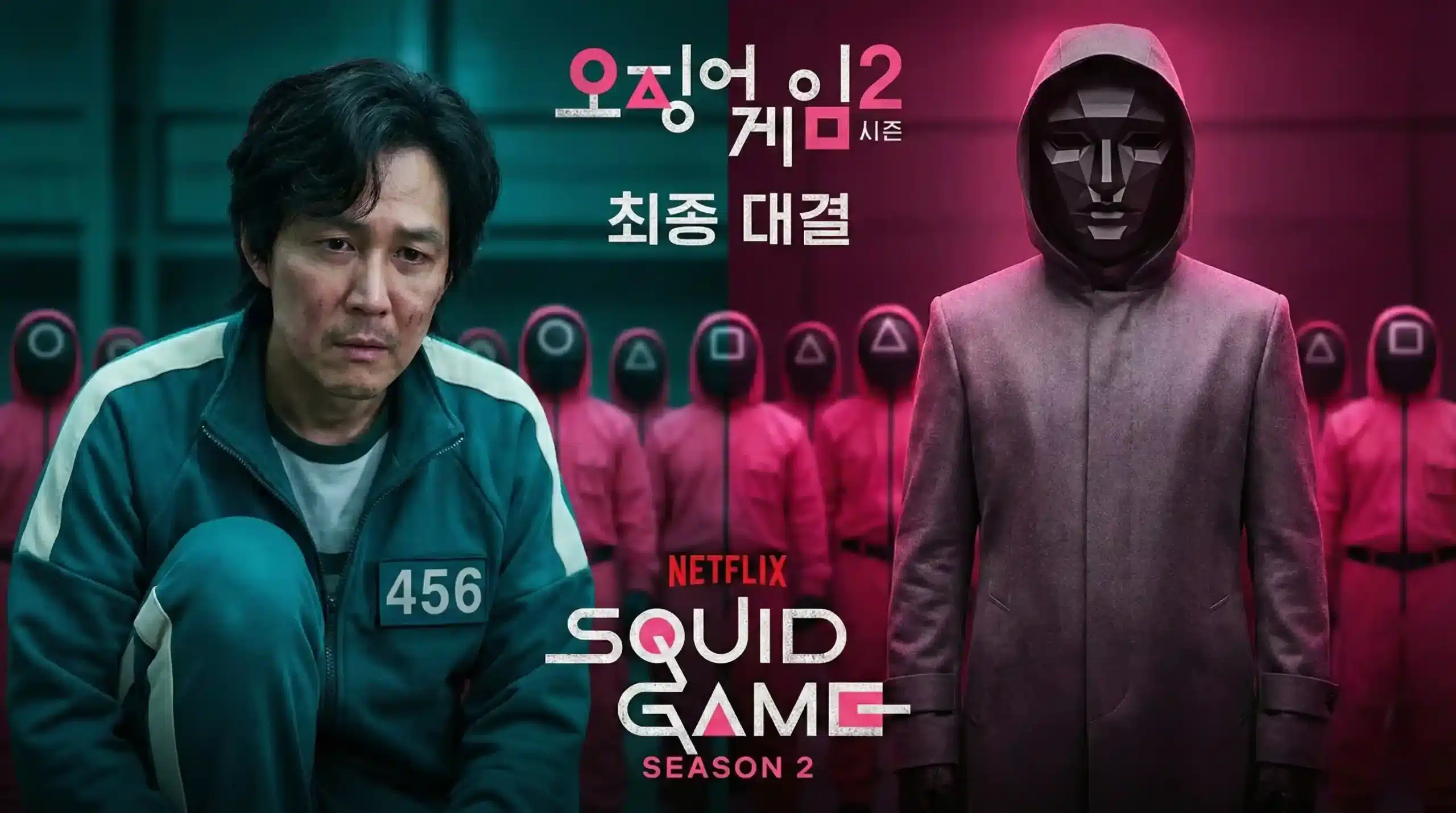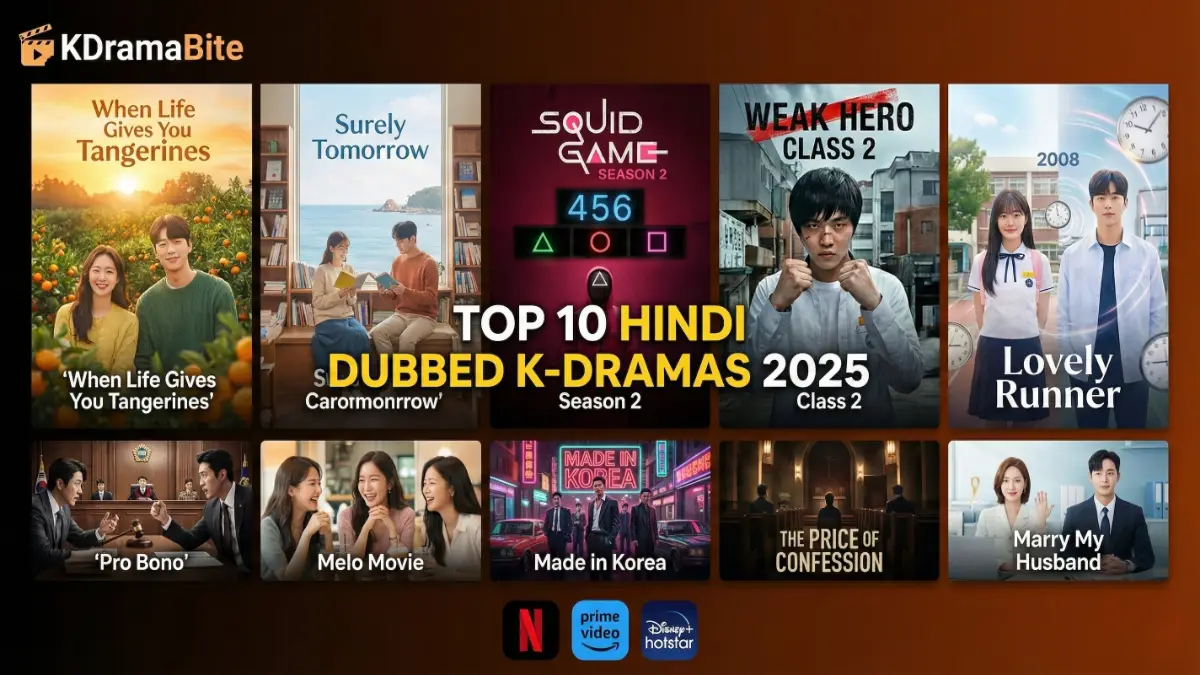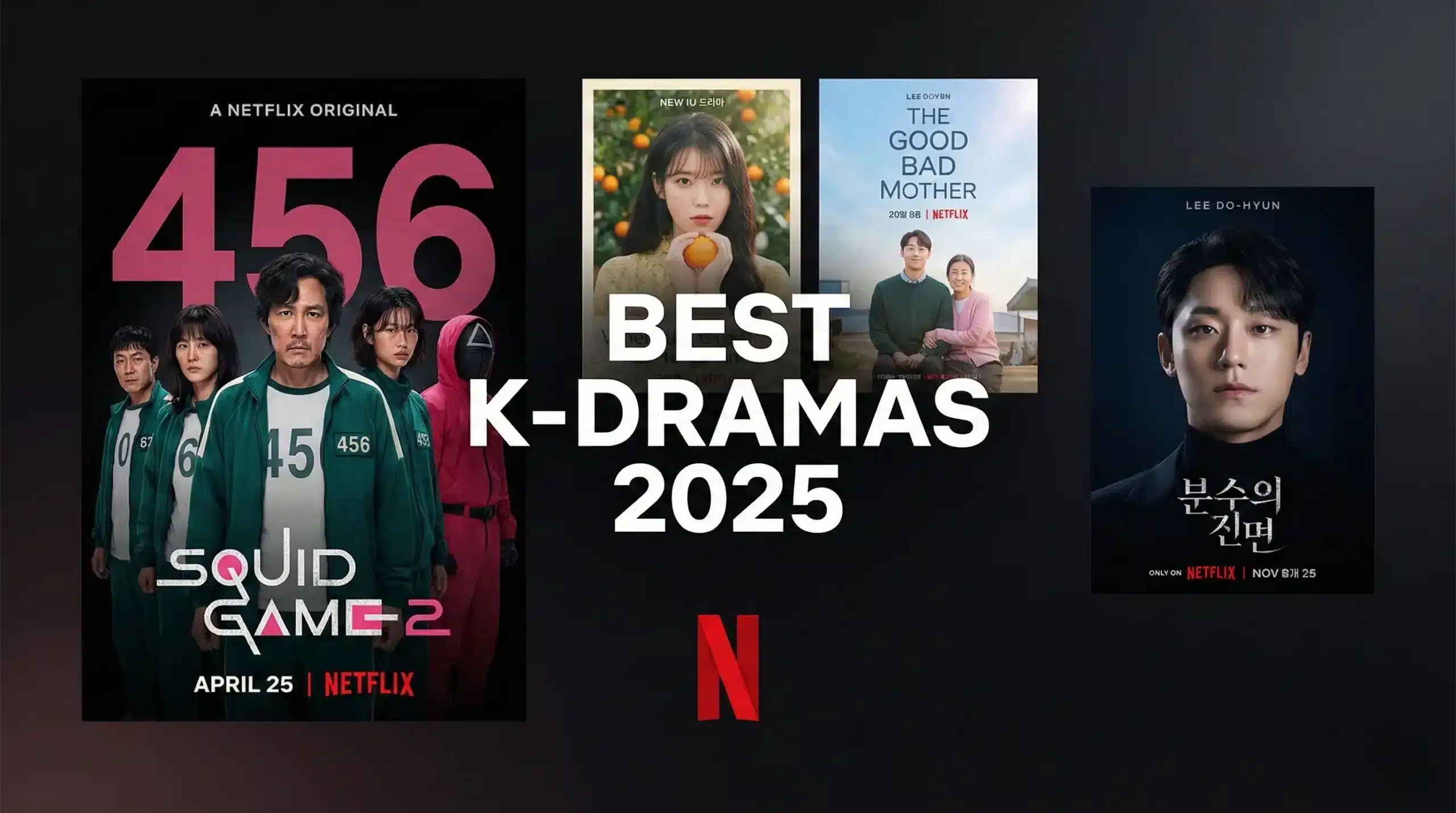
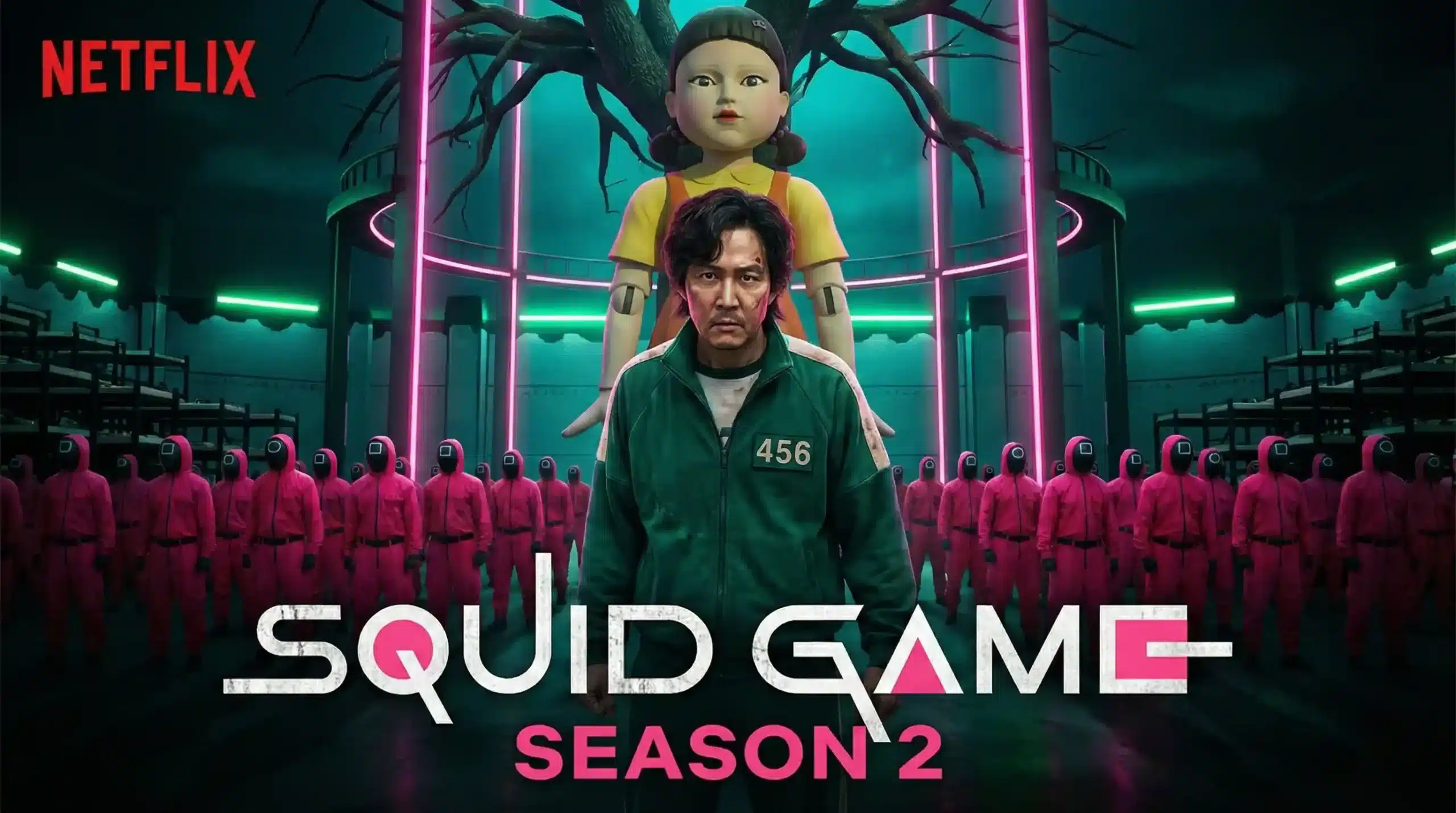
The wait is finally over. After four years of global anticipation, Netflix dropped Squid Game Season 2 on December 26, 2025, and it’s already breaking records as one of the most-watched releases of the year. If you’ve been following our Best K-Dramas of 2025 Guide, you know this series has been at the top of everyone’s must-watch list. The survival thriller that took the world by storm in 2021 returns with Lee Jung-jae reprising his role as Seong Gi-hun (Player 456), but this time, he’s not playing for money—he’s playing to end the games forever.
While our Best Netflix K-Dramas 2025 English List features several incredible titles, Squid Game Season 2 stands in a category of its own. This isn’t just a sequel; it’s a bold continuation that dares to ask: Can one man dismantle a system built on desperation and greed? Over seven intense episodes, director Hwang Dong-hyuk delivers a darker, more complex narrative that expands the mythology while keeping viewers on the edge of their seats.
Table of Contents
The Setup: Gi-hun’s Impossible Mission
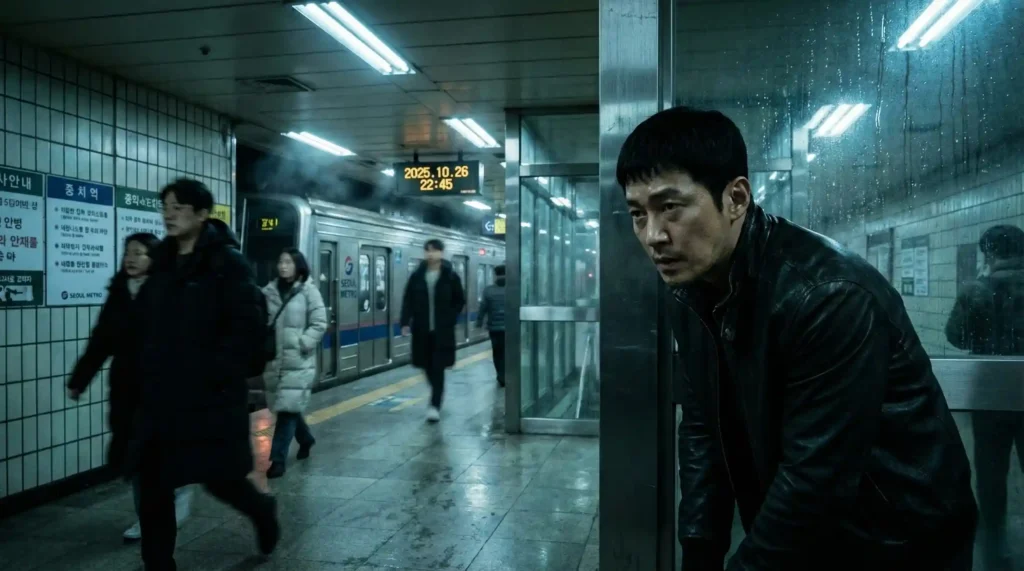
Season 2 picks up three years after the traumatic events of Season 1. Gi-hun, now a man haunted by survivor’s guilt and armed with 45.6 billion won, has transformed from a desperate gambler into a determined vigilante. Instead of enjoying his winnings or starting fresh, he’s spent the past three years obsessively searching for the people behind the games. His hair has returned to its natural black, but his eyes carry the weight of 455 deaths he witnessed.
The season opens with Gi-hun tracking down recruiters in subway stations—the same ddakji-playing salesmen who lure desperate individuals into the deadly competition. His plan is audacious: infiltrate the games once more, but this time as a saboteur determined to destroy them from within. He’s assembled a small team, including his old friend Hwang Jun-ho (Wi Ha-jun), a police officer who lost his brother in the games and has his own vendetta.
This revenge-driven narrative reminds me of the intense psychological stakes we explored in our The Price of Confession Recap, where characters grapple with moral choices that define their humanity. Gi-hun isn’t just fighting for survival anymore—he’s fighting for redemption.
New Players, Higher Stakes: Inside the Games
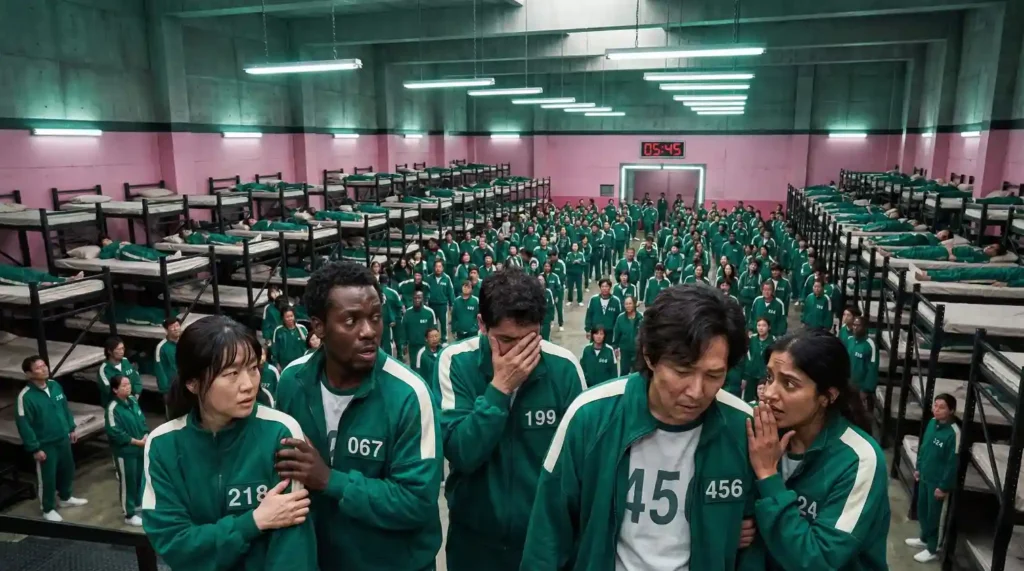
When Gi-hun re-enters the games, he discovers that the organizers have evolved their operation. The player count has increased to 456 again, but the demographic has shifted. There are more international participants, including players from Southeast Asia, Africa, and the Middle East, reflecting the global reach of the games’ recruitment network. The debt crisis isn’t just Korean anymore—it’s a worldwide epidemic.
The new cast of players brings fresh dynamics to the dormitory politics. Among the standout characters:
Player 390 (Im Si-wan): A YouTube influencer who documented his mounting debts online, representing the modern generation’s relationship with financial desperation and social media validation. His arc is particularly tragic as he initially treats the games like content for his non-existent camera.
Player 222 (Kang Ha-neul): A North Korean defector whose backstory illuminates the extreme measures people take to escape poverty. Her alliance with Gi-hun becomes crucial to his mission.
Player 124 (Park Gyu-young): A pregnant woman who entered the games to secure her unborn child’s future—a heartbreaking reminder of how the system crushes even the most vulnerable.
Player 001 (Lee Byung-hun): The biggest twist of the season. The Front Man himself has entered the games as a player, creating a deadly cat-and-mouse game with Gi-hun, who recognizes him from their previous encounter.
The seven-episode format—which fans of our 10 Short K-Dramas Binge Guide will appreciate—allows for a tightly paced narrative where every scene matters. Unlike Season 1’s 9 episodes, this condensed structure amplifies the tension and eliminates any filler.
The Games: Familiar Terror, New Twists
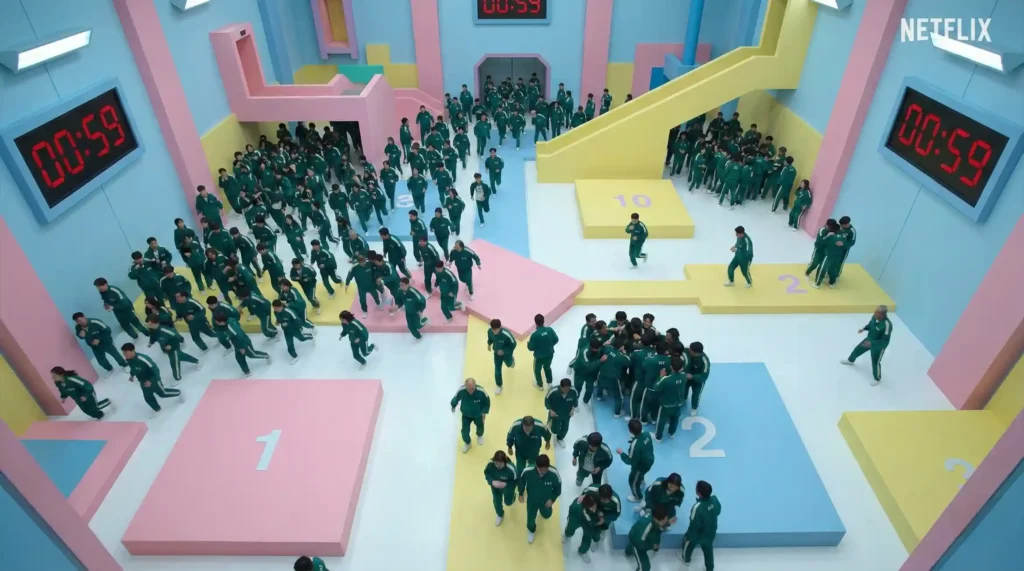
Season 2 introduces five new games alongside reimagined classics, each designed to be more psychologically torturous than before:
Game 1: Red Light, Green Light 2.0 – The iconic opener returns, but with a devastating modification. The motion-sensing doll now has companion dolls positioned at different angles, making it impossible to find a safe zone. The carnage is immediate and brutal, establishing that this season pulls no punches. Over 200 players are eliminated in the first ten minutes.
Game 2: Six-Legged Pentathlon – Teams of five must complete a relay race while bound together at the ankles. The game tests not just physical coordination but trust—and the aftermath reveals how quickly alliances fracture under pressure. Gi-hun uses this game to begin recruiting players to his cause, identifying those who show moral backbone.
Game 3: Mingle – Perhaps the most psychologically devastating game. Players must form groups of specific numbers within a time limit, and those left out are eliminated. The game forces players to repeatedly choose who lives and dies, wearing down their humanity with each round. This game destroys Player 390’s optimistic facade completely.
Game 4: The Sacrifice – A new game that requires teams to choose one member to play Russian roulette for the group’s advancement. The Front Man, still disguised as Player 001, uses this game to test Gi-hun’s resolve and expose his plan to the other guards.
Game 5: Bridge Building – Not the glass stepping stones from Season 1, but a twisted variation where teams must construct bridges using limited materials while other teams can sabotage them. The game devolves into violence as desperation overrides cooperation.
The production value has skyrocketed. Each game is a masterclass in production design, with sets that feel both hyper-stylized and disturbingly clinical. The contrast between the colorful playground aesthetic and the visceral violence remains the series’ signature horror.
The Psychological War: Gi-hun vs. The Front Man
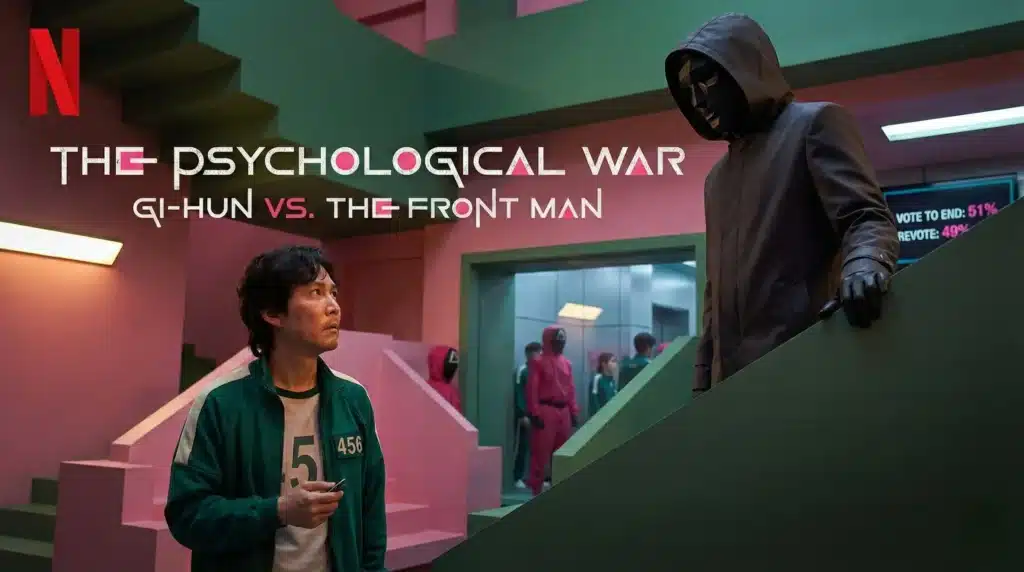
The core of Season 2 is the ideological battle between Gi-hun and the Front Man (Lee Byung-hun, revealed to be Jun-ho’s missing brother, Hwang In-ho). Their confrontations—both subtle and direct—form the philosophical backbone of the season.
The Front Man, having won the games years ago, represents complete submission to the system. He believes the games are a necessary evil, a brutal meritocracy that gives the desperate a chance they wouldn’t have otherwise. His presence as Player 001 isn’t just surveillance—it’s a test of whether Gi-hun’s compassion can survive the games’ crucible a second time.
Gi-hun, conversely, sees the games as the ultimate expression of societal failure. His plan to rebel from within—encouraging players to vote to end the games, forming alliances, trying to expose the guards’ identities—is constantly undermined by the Front Man’s manipulations and the players’ own survival instincts.
The character motivations here are as layered as those we discussed in The Price of Confession Ending Explained, where moral complexity drives the narrative. The show refuses to provide easy answers about human nature under extreme pressure.
One of the season’s most powerful scenes occurs in Episode 5, when Gi-hun successfully convinces enough players to vote for termination of the games. For a brief moment, it seems like compassion has won. But the Front Man, anticipating this, has seeded the group with plants who request a revote, and fear ultimately overrides solidarity. The games continue, and Gi-hun’s faith in humanity takes a devastating hit.
The Social Commentary: Deeper and Darker
While Season 1 used the games as a metaphor for capitalism’s exploitation of the poor, Season 2 expands its critique to encompass global inequality, surveillance capitalism, and the entertainment industry’s complicity in suffering.
We learn that the games are now being live-streamed to VIP viewers worldwide, with betting markets and interactive elements that allow the ultra-wealthy to influence game outcomes through “donations.” This darkly mirrors real-world phenomena like disaster tourism and the commodification of trauma on social media platforms.
The international player diversity isn’t just representation—it’s commentary on how debt and desperation are universal weapons wielded by the global elite. A powerful subplot involves Player 222’s revelation that similar games exist in other countries, each tailored to local contexts but serving the same masters.
The Hindi dubbing for this season—which fans of our Top 10 High-Rated Hindi Dubbed K-Dramas 2025 will appreciate—has been particularly praised for capturing the emotional nuance of these heavy themes, making the show accessible to an even broader global audience.
The Visuals and Direction: A Cinematic Achievement
Hwang Dong-hyuk’s direction in Season 2 is more confident and cinematic than ever. The color palette remains dominated by those unsettling pinks and greens, but this season introduces more shadow work, reflecting Gi-hun’s darker mission.
The cinematography by Lee Hyung-deok deserves special mention. Long tracking shots through the dormitory capture the paranoia and shifting alliances, while the game sequences use rapid cuts and disorienting angles to immerse viewers in the chaos. The contrast between the guards’ cold efficiency and the players’ raw desperation is visually striking in every frame.
The score by Jung Jae-il returns with haunting variations on Season 1’s themes, but new compositions add orchestral weight to Gi-hun’s crusade. The use of silence is equally powerful—moments before violence erupt are often completely quiet, making the sudden brutality even more shocking.
The Performances: Lee Jung-jae’s Masterclass
Lee Jung-jae delivers a career-defining performance in Season 2. His Gi-hun is no longer the bumbling, indecisive man from Season 1. This is a man hardened by trauma but desperate to retain his humanity. Jung-jae conveys this internal war through micro-expressions—the way his jaw tightens when he watches another player die, the brief flicker of hope when someone shows kindness, the dead-eyed stare when he realizes his plan is failing.
Lee Byung-hun’s Front Man is equally compelling. Playing both the masked authority figure and the mysterious Player 001, he brings a chilling charisma to the role. His scenes with Jung-jae crackle with tension, as two men with intimate knowledge of the games’ horror operate from opposite philosophies.
The supporting cast also shines. Im Si-wan’s transformation from cocky influencer to broken shell is particularly effective, while Park Gyu-young’s pregnant player provides the season’s most emotionally devastating moments without ever feeling exploitative.
The Cliffhanger: No Easy Answers
Season 2 ends not with resolution but with escalation. Gi-hun’s rebellion has been exposed, the Front Man’s identity is partially revealed to other players, and the games enter a chaotic new phase where the traditional rules break down. The final episode, “Friend or Foe,” sees the dormitory erupt into violence as players divide into factions—those who want to end the games and those who want to continue.
The season’s final shot is of Gi-hun, bloodied and surrounded by bodies, looking directly at a camera he’s discovered hidden in the dormitory. He knows he’s being watched by the VIPs. He knows his rebellion has failed to save most of the players. But his expression suggests something more dangerous than defeat: understanding. He’s learned something about the games’ true purpose that we, the audience, haven’t been shown yet.
This ending confirms that Season 3—already announced for 2026—will be the final chapter, and based on what we’ve seen, it will be explosive.
For viewers craving more survival horror content while waiting for the next season, our All of Us Are Dead Season 2 Updates might satisfy that itch for Korean survival narratives with high stakes.
The Cultural Impact: Still Relevant, Still Powerful
Four years after the original, Squid Game remains culturally relevant because its core critique—that modern society treats human life as disposable in service of wealth accumulation—has only become more prescient. The pandemic, inflation, and widening wealth gaps have made the show’s themes resonate even more deeply with global audiences.
Season 2 doesn’t simply repeat Season 1’s success; it interrogates it. By having Gi-hun return as someone trying to destroy the system, the show asks whether individual action can dismantle structural evil. The answer, so far, is heartbreakingly complex.
The show has also sparked renewed conversations about debt relief, universal basic income, and the ethics of reality television—debates that extend far beyond entertainment into real policy discussions.
Richa’s Take
Squid Game Season 2 is a brutal, brilliant expansion of the original that refuses to provide comfort or easy heroism. Watching Gi-hun try to maintain his humanity while surrounded by inhumanity is both inspiring and devastating—a perfect reflection of trying to be good in a world that punishes goodness.
Final Thoughts
Squid Game Season 2 is a triumph of storytelling that matches and in some ways surpasses its predecessor. The seven-episode format keeps the narrative razor-sharp, the performances are extraordinary, and the social commentary cuts deeper than ever. While it lacks the shock of novelty that Season 1 possessed, it compensates with richer character work and bolder thematic ambitions.
Lee Jung-jae’s Gi-hun remains one of the most compelling protagonists in modern television—a man trying to be a hero in a narrative that questions whether heroes can exist in systems designed to crush them. His journey in Season 2 is far from over, and the cliffhanger ending ensures that the conversation around this show will continue to dominate pop culture.
If you’re planning your 2026 watchlist, be sure to check out our Netflix January 2026 List for more incredible Korean content coming your way.
Now it’s your turn: Do you think Gi-hun will succeed in destroying the games once and for all, or is he destined to become another cautionary tale about the futility of individual resistance against systemic evil? Will the Front Man’s ideology prove correct—that the games are a necessary evil? And most importantly, would you have voted to continue or end the games? Share your thoughts in the comments below!